

 I’ve spent years believing storytelling lived in words.
In newsrooms, we’re trained to obsess over detail. A comma can shift meaning. A full stop can change the pace of how a story lands. You learn quickly that it’s not just what you say – it’s how you structure it, where you pause, and when you let something end.
Recently, I found myself thinking about that…but not in a newsroom.
In a room.
Working closely with architectural hardware at EuroArt has completely shifted how I see spaces. Because the more time I spend around design, the more I realise that interior spaces tell stories too.
And it hit me: interior design is storytelling too.
If a room is a story, then architectural hardware is the punctuation. Without it, everything feels like a run-on sentence – beautiful, maybe even impressive – but incomplete.
You can walk into a room with stunning marble, perfect lighting, and bespoke joinery…and still feel like something is missing.
It’s subtle.
But it’s there.
And more often than not, it’s because hardware is treated as an afterthought – something selected at the end, rather than considered from the beginning.
In writing, a period is tiny. You almost overlook it. But it carries weight – it tells the reader, this thought is complete.
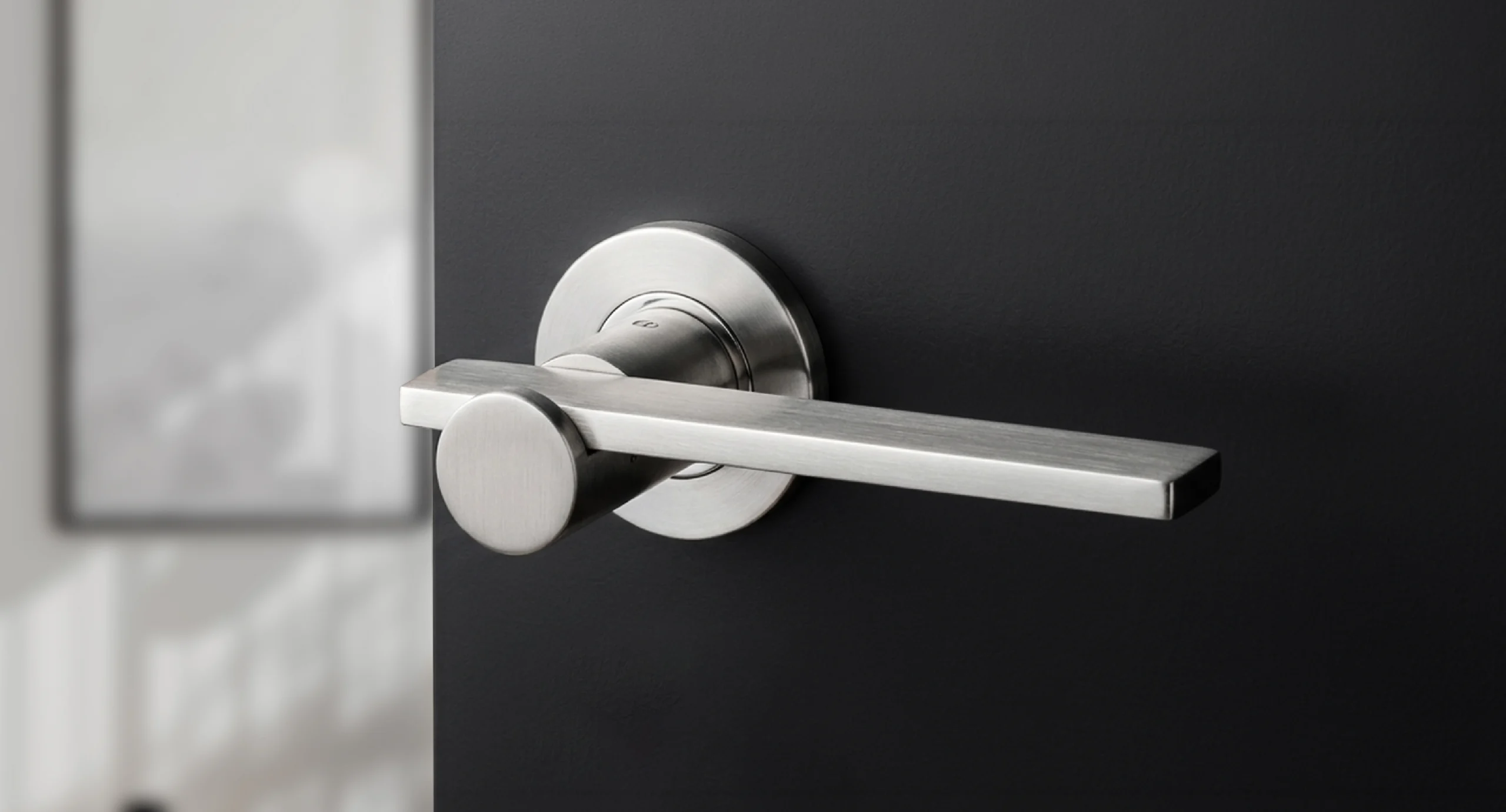
In a space, that role belongs to the door handle.
It’s the final interaction. The physical “click” that signals transition. Arrival. Closure.
Without it – or with the wrong one – the room feels like a draft. Unedited. Not fully resolved.
As journalists, we choose tone instinctively. A feature reads differently from breaking news. An opinion piece carries a different voice than a report.
Spaces do the same thing.
And hardware? That’s where the tone becomes tangible.
Some spaces are headlines. Bold. Unmissable. The kind that demands attention the second you walk in. Textured, industrial hardware fits here – it’s confident, sharp, and unapologetically present. It doesn’t blend in, and it’s not meant to.
Some spaces are poetry. Softer. Warmer. More intimate. This is where finishes like satin brass come in – they don’t shout, they flow. They catch light gently, like a well-placed metaphor. They feel lived-in, even when they’re brand new.
And some spaces say more by doing less. Minimalist design reminds me a lot of editing a piece down to its essence. You remove everything unnecessary. What’s left is intentional. Almost quiet. Hardware here becomes barely-there-functional, but never distracting.
Whether it’s a story or a space, the magic is in the edit.
And in design, that edit often gets overlooked.
Architectural hardware is still, in many cases, treated as a line item – something to tick off rather than something to think through. But in reality, it shapes how people experience a space, not just how they see it.
It’s in the decisions no one notices at first:
- the weight of a handle
- the sound of a latch
- the way something feels in your hand
These are small things.
But then again, so is a full stop.
And yet, it’s the difference between something unfinished…and something complete.
I think we underestimate how much these details shape our experience.
Because when everything is considered – when every element serves the story – you don’t just walk into a room.
You feel it.
And in both storytelling and design, it’s rarely the biggest elements that define the experience – it’s the ones people almost miss.
The ones that act as the full stop.