
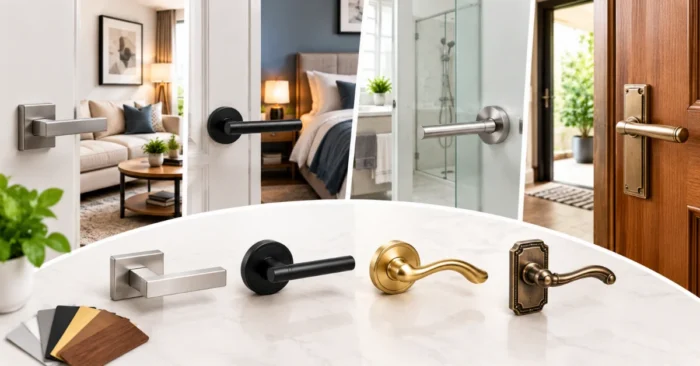
Choosing door hardware may seem like a small decision, but it affects both the appearance and daily use of a property. A suitable handle should complement the door, feel comfortable in the hand and work with the correct locking or latching mechanism. With a little planning, Door Handles can become a practical design feature rather than an afterthought.
Start with the Door and Its Purpose
Before browsing styles, identify where the handle will be installed. A bedroom door, a frequently used hallway door and an office door may have different practical requirements. Consider how often the door is opened, whether privacy is needed and whether the handle must work with an existing lock.
Measurements are important, too. Check the door thickness, the position of the existing fixing points and the type of latch or lock. When replacing old door handles, comparing the new product’s specifications with the existing hardware can make installation more straightforward.
Explore the Benefits of Lever Handles
Lever handles are widely used because they offer a comfortable grip and are available in a broad range of designs. From simple, modern profiles to more traditional shapes, they can suit many interior styles. However, the right model depends on the door, the mechanism and the needs of the people using it.
When comparing options, think beyond appearance. A well-designed handle should be easy to operate, securely fitted and appropriate for its setting. Check the manufacturer’s guidance for compatibility and installation, particularly when the handle is being paired with a new lock.
Choose a Finish That Complements Your Interior
The finish can influence whether a handle blends into a room or becomes a noticeable accent. A restrained finish may work well with minimalist décor, while a contrasting finish can draw attention to the door. For a consistent look, consider coordinating handles with hinges, cabinet hardware or other metal details.
Maintenance is another useful consideration. Different materials and finishes may require different cleaning methods, so follow the product care instructions. Avoid assuming that all finishes will age or respond to cleaning in the same way.
A Simple Checklist Before Buying
Use this checklist to compare your options:
- Confirm the handle is suitable for the door thickness and type.
- Check whether you need a passage, privacy or locking function.
- Compare the fixing centres and spindle or mechanism requirements.
- Choose a shape that is comfortable to grip.
- Review material, finish, care instructions and product specifications.
These steps help narrow the choice and reduce the chance of ordering hardware that does not suit the installation.
Frequently Asked Questions
Q1. Can I replace door handles without changing the lock?
Sometimes. It depends on the handle design, fixing points and compatibility with the existing lock or latch. Check the specifications before purchasing.
Q2. What should I consider when choosing lever handles?
Comfort, durability, finish, door compatibility and the required locking function are all important.
Q3. Is appearance the most important factor?
Appearance matters, but a handle should also fit correctly, operate smoothly and suit the demands of its location.
Conclusion
Choosing the right Door Handles means balancing style with practical details. Start with the door’s requirements, compare finishes and designs, and confirm compatibility before buying. EuroArt can be a starting point as you explore hardware options that suit your interior and everyday needs.